
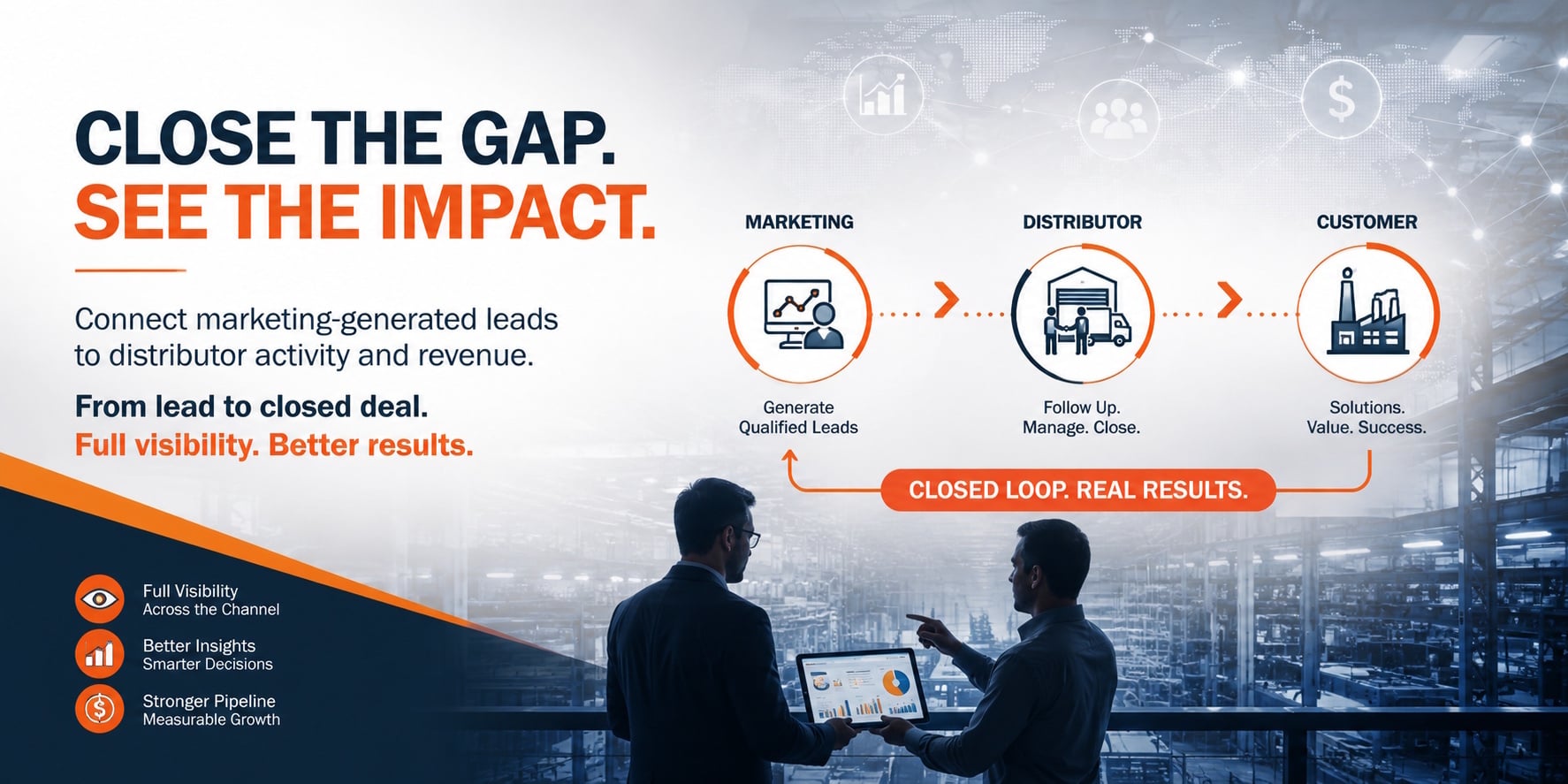
Lead tracking
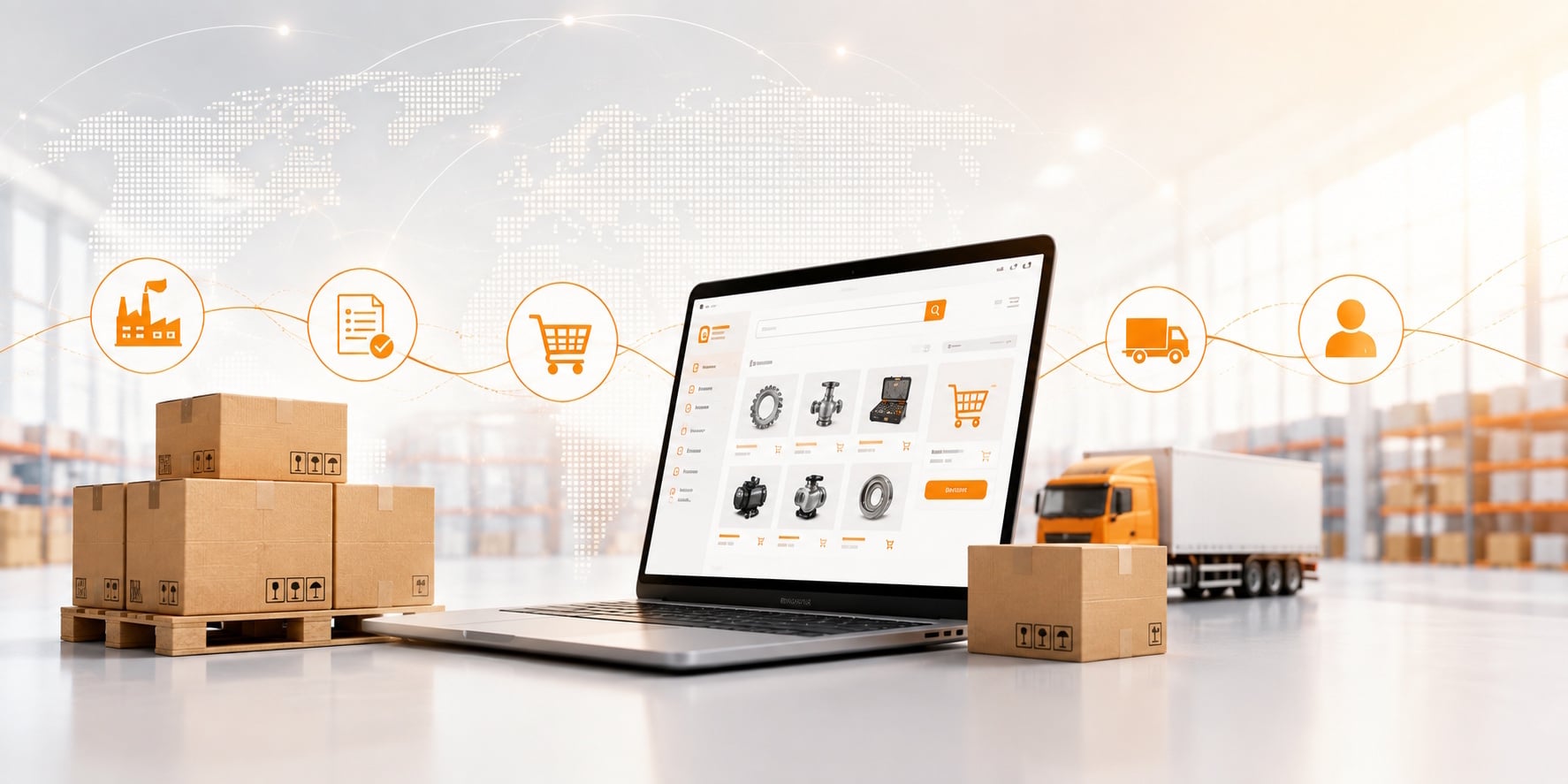

Many businesses approaching the “to be or not to be” decision about launching an online store have a long list of legitimate reasons not to rock the boat—especially when business is already going relatively well.
The concerns are real:
For B2B manufacturers and distributors, e-commerce is rarely as simple as putting a catalog online and adding a Buy Now button.
The good news is that you don't have to solve everything at once.
There are ways to mitigate these risks, start small, learn from actual customer behavior, and gradually arrive at an optimal configuration with the right mix of automation, technology, and human involvement.
One of the first questions organizations tend to ask is:
“Which e-commerce platform should we use?”
That's an important question—but it's usually not the first one that needs answering.
Before choosing technology, determine what role e-commerce should play in the business.
Are you trying to sell directly to existing customers? Capture aftermarket and replacement-parts revenue? Make it easier for distributors to order? Reach customers you don't currently serve? Reduce the cost of processing small orders? Generate leads for complex products? Test direct-to-customer sales without disrupting the existing channel?
Those objectives can lead to very different e-commerce strategies.
And sometimes the right answer isn't a traditional online store at all.
Two options frequently considered by companies entering B2B e-commerce are Shopify and Amazon Business. Both can put products in front of business buyers, but they solve fundamentally different problems.
Shopify gives a business much greater control over its digital customer experience.
You control the brand, merchandising, product information, customer journey, analytics, marketing programs, and—most importantly—the customer relationship.
For manufacturers and distributors, that control can be extremely valuable.
A Shopify-based operation can potentially support different customer groups, negotiated pricing, product catalogs, payment terms, account-specific experiences, integrations, and other capabilities required in B2B commerce.
It can also become part of the larger digital ecosystem rather than simply functioning as a store.
SEO can attract customers searching for products and solutions. Paid media can drive targeted traffic. Marketing automation can nurture prospects. CRM integration can connect online behavior with sales activity. Analytics can reveal what customers actually want.
But greater control also means greater responsibility.
You need to generate traffic, manage merchandising, maintain product information, establish fulfillment processes, support customers, integrate systems, and continuously optimize the experience.
In other words, Shopify gives you the infrastructure for building a channel. It doesn't automatically give you the market.
Amazon Business approaches the problem from almost the opposite direction.
Instead of building a destination and attracting customers to it, you put your products into a marketplace where millions of business customers already shop.
That can significantly reduce one of the biggest challenges of launching e-commerce: customer acquisition.
Amazon can be particularly attractive for standardized products, replacement parts, consumables, accessories, MRO products, and other items customers already understand and are comfortable purchasing without assistance from a salesperson.
It can also provide a relatively controlled way to test demand.
Instead of building an entire direct-to-customer infrastructure based on assumptions, a manufacturer may introduce a selected assortment and learn which products customers actually search for, purchase, reorder, and bundle together.
But there is a trade-off.
On Amazon, you operate within someone else's marketplace. You have less control over the customer experience, branding, merchandising environment, customer data, and the overall relationship with the buyer.
Competition is also only a click away.
That makes Amazon potentially very powerful as a sales and customer-acquisition channel, but fundamentally different from building your own digital commerce capability.
For many B2B organizations, the most effective answer may eventually be both.
Amazon can provide reach, product discovery, convenience, and access to customers who prefer marketplace purchasing.
Your own e-commerce site can provide the richer customer experience: broader product information, account relationships, specialized catalogs, technical resources, complex configurations, marketing automation, customer service, and deeper integration with the rest of the business.
The product assortments don't necessarily have to be identical either.
A manufacturer might offer readily shippable replacement parts and consumables through Amazon while directing customers to its own site for broader product families, specialized products, configurable solutions, or account-specific purchasing.
This is where e-commerce strategy becomes much more interesting than simply asking:
“Should we open an online store?”
The better question is:
“What combination of digital channels makes buying from us easier while supporting the economics and relationships of our existing business?”
You don't need to “boil the ocean”, at least not on day one.
A B2B e-commerce initiative can begin with a surprisingly narrow scope.
Start with a specific product family. A replacement-parts catalog. One geography. One customer segment. Existing customers only. Products that don't create channel conflict. Or an Amazon assortment designed specifically to test marketplace demand.
Then observe what happens.
What are customers searching for? Which products convert? Which products are frequently purchased together? Where do customers abandon the process? Which questions still require human assistance? What orders can be completely automated? What operational bottlenecks appear?
Those answers are far more valuable than assumptions made in a conference room.
Successful B2B e-commerce often develops through this crawl-walk-run process: launch something manageable, measure what happens, improve the operation, and expand based on evidence.
This may be the most overlooked benefit of e-commerce.
Unlike many other technology projects, e-commerce implementation can have a tremendous healing effect on an organization.
The moment customers begin interacting directly with your digital purchasing experience, weaknesses that have existed quietly for years suddenly become visible.
Product descriptions aren't consistent.
Images are missing.
SKUs don't follow the same conventions.
Pricing logic exists in spreadsheets—or in someone's head.
Inventory isn't as accurate as everyone thought.
Shipping rules were designed around pallets, not individual boxes.
Marketing and sales categorize customers differently.
ERP, CRM, PIM, and marketing systems don't quite agree on what a customer or product actually is.
Processes that work perfectly well when an experienced employee manually intervenes suddenly become difficult to automate.
E-commerce exposes these problems because software can't rely on tribal knowledge.
And that's precisely why implementing it can be so valuable.
Developing an e-commerce channel can improve much more than online revenue.
Marketing gets better because products require clearer positioning, better content, stronger search visibility, and measurable customer acquisition.
Product management gets better because product information, attributes, relationships, pricing, and availability have to become structured and consistent.
Sales gets better because organizations have to decide which transactions genuinely require a salesperson and which can be handled through self-service.
Operations gets better because fulfillment, inventory, shipping, returns, taxes, and customer communication have to become repeatable processes.
Customer experience gets better because the organization begins looking at the business from the buyer's perspective rather than through its own internal organizational structure.
And management gets better information because digital commerce produces behavioral data that traditional sales processes often cannot provide.
You begin seeing not only what customers purchased, but what they searched for, viewed, compared, abandoned, returned to, and ultimately selected.
That information can influence far more than the e-commerce operation. It can inform product development, pricing, inventory planning, marketing, sales strategy, and business development.
That's why viewing B2B e-commerce purely as another revenue channel misses much of its value.
Done correctly, it becomes a practical digital transformation initiative tied directly to customers and transactions.
It forces marketing, sales, product management, IT, finance, customer service, and operations to work through real business problems together.
You don't have to replace every system.
You don't have to automate every process.
And you certainly don't have to eliminate the human relationships that make B2B businesses successful.
The objective is to determine where technology makes the business faster and easier to work with — and where people continue to add the most value.
That balance will look different for every organization.
The important thing is to start with the business problem, choose a manageable point of entry, learn from real customer behavior, and build from there.
See how we've built and adapted e-commerce solutions in some of the most rigorous B2B environments—and how the lessons learned can help shape your own path to digital commerce.